
If you run a food business in Lagos, you already know the routine: someone — a chef, a kitchen assistant, sometimes the owner themselves — leaves before sunrise to fight traffic to Mile 12 or Ketu, haggles over crates of tomatoes and peppers, hopes the quality holds up, and drags it all back across town before service starts. Do this five, six, seven times a week, and it stops feeling like sourcing. It starts feeling like a second job nobody signed up for.
There's a better way to keep a kitchen stocked, and more Lagos restaurants, caterers, and cloud kitchens are quietly switching to it: farm-direct bulk delivery. No daily market runs. No haggling. No guessing whether today's tomatoes will hold up through Saturday's rush.
Here's what reliable bulk produce sourcing actually looks like — and how to set it up for your business.
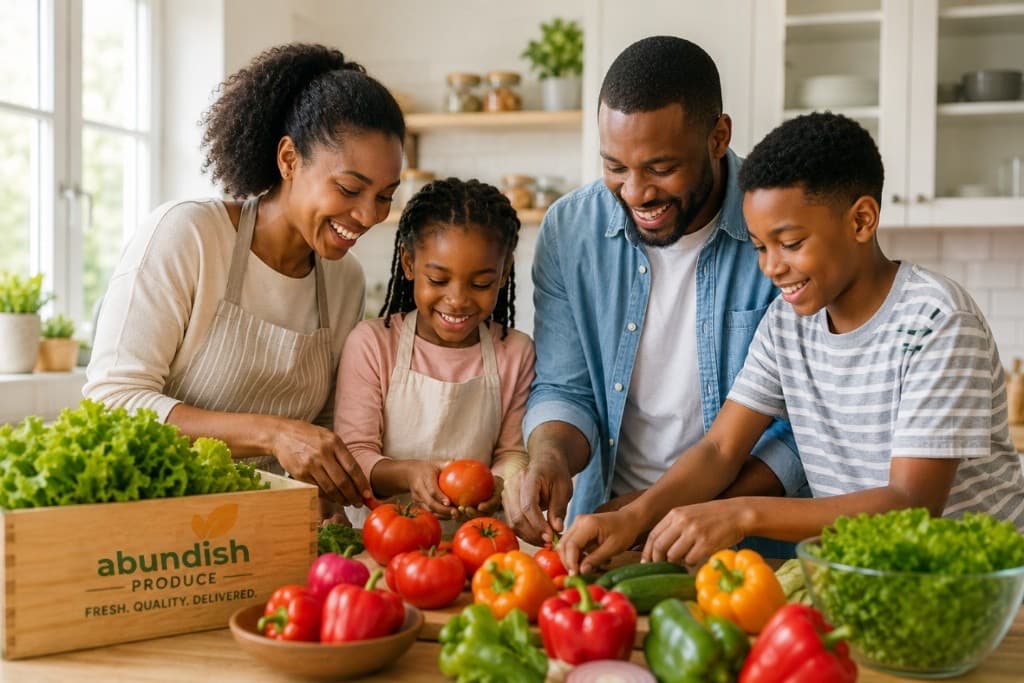
The Hidden Cost of Market Runs for Food Businesses
Every food business owner in Lagos has done the mental math at some point, even if only roughly. It rarely comes out in your favour.
Time. A market run isn't a quick errand. Between traffic, parking, walking the market, negotiating, and getting back, you're realistically losing two to four hours a day — time your chef or manager should be spending on prep, quality control, or menu development, not standing in Mile 12 traffic.
Distance and traffic. If your kitchen sits anywhere along the Lekki–Ajah corridor, Victoria Island, or Ikoyi, you're adding real commute time on top of the market visit itself. That's fuel, driver hours, and vehicle wear you're paying for just to get ingredients in the door.
Inconsistent quality. Open markets are supply-and-demand chaos. The tomatoes that looked perfect on Monday might be a different batch — and a different quality — on Thursday. That inconsistency shows up in your food: uneven portion sizes, dishes that taste slightly different week to week, and produce that spoils faster than expected.
Waste and complaints. Lower-grade or already-ageing produce doesn't last as long in storage, which means more spoilage before it's even used. And when quality dips, it's your customers who notice first — in the plate, not the invoice.
Rainy season disruption. From April through October, Lagos rain doesn't just slow traffic — it can shut a market run down entirely. A supplier that delivers to your door removes that variable completely.
None of this is a complaint about the market itself. It's simply a description of what open-market sourcing costs a business once you account for everything beyond the price tag on the produce.
Why Bulk Sourcing Breaks Down at the Open Market
The problems above aren't random bad luck — they're baked into how open-market produce moves from farm to kitchen.
Middlemen inflate the price, and farmers still earn less. Produce typically passes through two or three hands before it reaches a market stall, with each layer adding margin. The farmer at the start of that chain often earns the least, while your business pays a price that reflects every hand in between.
Produce loses freshness in transit and storage. By the time vegetables reach an open market, they may already have spent days moving between collection points, holding yards, and stalls — before you've even bought them.
There's no traceability. If a batch of produce arrives underweight, damaged, or below standard, there's rarely a clear line back to where it came from — or anyone accountable for fixing it.
Prices and volumes shift daily. What you paid for a crate of tomatoes on Monday isn't what you'll pay on Friday, and availability can swing just as much. That makes it genuinely hard to plan a menu, price a dish, or forecast a food-cost percentage with any confidence.
A dependable B2B produce partner exists specifically to solve this chain of problems — not by cutting corners, but by cutting out the parts of the chain that don't add value for your business.
What a Reliable B2B Produce Partner Should Offer
Before choosing who supplies your kitchen, it's worth knowing what "reliable" actually looks like in practice. A supplier worth building a standing relationship with should offer:
- Consistent quality grading — so the tomatoes you get this week match the ones you got last week, batch after batch.
- Predictable delivery windows — so your kitchen can plan prep schedules around a known arrival time, not a hopeful estimate.
- Traceable farm sourcing — so if there's ever a quality issue, there's a clear line back to where the produce came from.
- Flexible order volumes — a supplier shouldn't force you into large minimums just to get a delivery slot. Your order size should scale with your business, not the other way round.
- Responsive support — a real person on WhatsApp or phone who can confirm an order, adjust a delivery, or troubleshoot an issue same-day.
- A clear quality guarantee — a straightforward path to flag and resolve produce that doesn't meet standard, without a drawn-out back-and-forth.
This is the standard Abundish is built around. Sourcing directly from verified Nigerian farms, produce is quality-checked before it's dispatched, and there's no minimum order size — a business ordering three crates gets the same reliability as one ordering thirty. Requests are handled directly through WhatsApp or the contact page, so scheduling a standing order or a one-off bulk delivery doesn't mean navigating a call centre.
Typical Bulk Order Guide by Business Type
Sourcing needs look different depending on what kind of food business you're running. Here's a general starting point — treat it as a baseline to adjust once you know your own kitchen's weekly draw:
| Business type | Weekly staples | Suggested order cadence |
|---|---|---|
| Small restaurant (30–50 covers/day) | Tomatoes, peppers, onions, leafy greens, plantain | 3× weekly |
| Caterer / event planner | Bulk tomatoes, pepper, potatoes, carrots, cabbage | Per-event, plus a standing weekly order |
| Cloud kitchen | Pre-portioned vegetables, eggs, kitchen staples | Daily or every 2 days |
| Hotel / corporate kitchen | Seasonal produce plus staple mix | Custom schedule, arranged directly |
A sample weekly shopping list for a small restaurant might look something like: 2 crates of tomatoes, 1 bag of mixed peppers, 5kg onions, a bundle of ugu or waterleaf, and a bag of plantain — adjusted up or down against your actual covers and menu. Caterers working event-to-event will want to size orders against the guest count and menu for each booking, while keeping a smaller standing order for kitchen basics in between.
The point of mapping this out isn't rigidity — it's predictability. Once you know roughly what you need and when, ordering stops being a daily decision and becomes a simple, repeatable process.
How Abundish Handles Bulk & B2B Orders
Getting set up with Abundish for bulk sourcing is straightforward:
- Reach out directly via the contact page or WhatsApp to discuss volume and delivery schedule.
- Agree on a cadence that fits your kitchen — daily, every few days, or a standing weekly order, with room to adjust for events or busy periods.
- Produce is quality-checked before dispatch, so what arrives at your kitchen door has already been through inspection.
- Delivery covers Lagos widely — including Lekki, Victoria Island, Ikoyi, Surulere, Ikeja, and surrounding areas.
- Same-day delivery is available for orders placed before 6:00 PM, Monday to Saturday — useful for topping up ahead of a busy service or unexpected event booking.
There's no punishing minimum order size, which means a growing cloud kitchen can start small and scale its order volume up as covers grow, without needing to renegotiate terms.
Cost Control Tips for Lagos Food Businesses
Switching suppliers is only half the picture — how you manage sourcing day-to-day matters just as much for your margins:
- Plan menus around in-season produce. Seasonal items are typically more abundant and better priced. Building specials or standing menu items around what's currently in season keeps food costs lower without sacrificing quality.
- Replace panic market runs with standing orders. A 2–3 day standing order removes the last-minute scramble that often leads to overpaying or accepting lower-quality produce out of urgency.
- Track spend per dish. With predictable, farm-direct pricing, it's far easier to cost a dish accurately and spot which menu items are quietly eating into margin.
- Consolidate around one trusted supplier instead of five market vendors. Fewer relationships to manage means fewer inconsistencies to troubleshoot, and more leverage to request the exact grading, volume, or schedule your kitchen needs.
Where This Plays Out in Practice
A handful of scenarios that echo what food businesses commonly report once they move to farm-direct bulk sourcing:
- A brunch spot on the Lekki side cuts its sourcing routine from a three-hour market run down to a twenty-minute order placed the evening before.
- A caterer stops losing margin to tomatoes that spoiled before an event, because produce now arrives closer to delivery day rather than sitting for days beforehand.
- An office pantry programme sets up a standing same-day fruit delivery, replacing the ad-hoc runs that used to fall on whoever had time that morning.
None of these require a large operation — they're the kind of small, compounding wins that come from removing one unreliable step from a daily routine.
Frequently Asked Questions
Do you supply restaurants in Lekki? Yes. Delivery covers Lekki along with Victoria Island, Ikoyi, Surulere, Ikeja, and other areas across Lagos.
Is there a minimum bulk order? No. Orders are handled flexibly by volume, whether that's a small standing order for a new cloud kitchen or a large weekly delivery for an established restaurant.
Can I get same-day delivery for a large order? Orders placed before 6:00 PM, Monday to Saturday, are eligible for same-day delivery, subject to availability — useful for topping up ahead of an unexpectedly busy service.
How do I request a custom quote? Reach out directly through the contact page or WhatsApp with your business type, expected volume, and preferred delivery schedule, and terms can be arranged from there.
What if produce arrives below standard? Every order is quality-checked before dispatch, and any issue with an order can be flagged directly for resolution.
Ready to Stop Losing Hours to Market Runs?
Enquire about bulk orders → Browse the store →
Or reach out directly on WhatsApp: "Hi Abundish, I'd like to discuss bulk produce for my restaurant."